
Dead Cowboy: The Process
In late 2025, a fellow graduate student approached me to see if I was interested in collaborating with them on their thesis. Isa Hernandez (she/they) was a student in the Sound Art & Industries program, who I had met at a mixer hosted by Northwestern’s School of Communication while in my Leadership for Creative Enterprises program. They were using a song called “Dead Cowboy” by Lightning Bolt that was created during the start of the Iraq war. The plan was for them to manipulate the sound and film the danced reaction to it.
I listened to the song and noted that a lot of the track sounded the same (with a disclaimer that I am cursed with my lack of musical understanding) as well as being incredibly hard to count. While I don’t use a lot of counts as a choreographer (I quite literally passed my undergraduate music theory class only by doing many extra credit assignments), most of my work that I create does rely on music cues. To reduce the workload/monetary costs and complement the intention to focus on the dancer’s reaction, I opted to create an improvisational score.
What is an improvisational score? A score is a structure or set of rules that shape the improvisation. Improvisation is deciding how to move on the spot without thinking it through beforehand. For example, if you’re dancing at a club or concert, you’re usually not thinking about how you’re moving – you’re just dancing to the music and doing what you want to.
After making this decision, I went ahead and talked to Isa about what I was thinking then reached out to my dancers in Darvin Dances. Two were available for two 3-hour rehearsals along with a filming session. I created the improvisational score, and we tweaked it during the rehearsal process. I decided to take out one of these rules during the first rehearsal because I felt like it was unnecessary. In addition, I created one movement phrase they did at the beginning then could draw from throughout the improvisation alongside several set movements:
SCORE
Beginning - set movement phrase
Once you first hear the cymbals - do an jumping explosion
If you think you hear Cowboy, do a set movement
If you think you hear light on fire, immediately fall to the ground and flay around
When you hear the building crescendo start bouncing towards each other
If you see the other dancer make double finger guns at you, take off the sunglasses it's dance battle time. 1st dance battle, add on; 2nd dance battle fake fight, alternate
After a dance battle, you must do an eight count adagio
At five minutes, there's a melody - grab the other dancer and do contact improvisation to see how many pairs of sunglasses you can take from them
If at any point you have no sunglasses, yell with melty hands
Jump and fall at the end
I forgot to mention that for some reason after listening to the song, I felt strongly that there needed to be sunglasses strewn across the stage. I am still not quite sure why, but I felt it needed to be done.
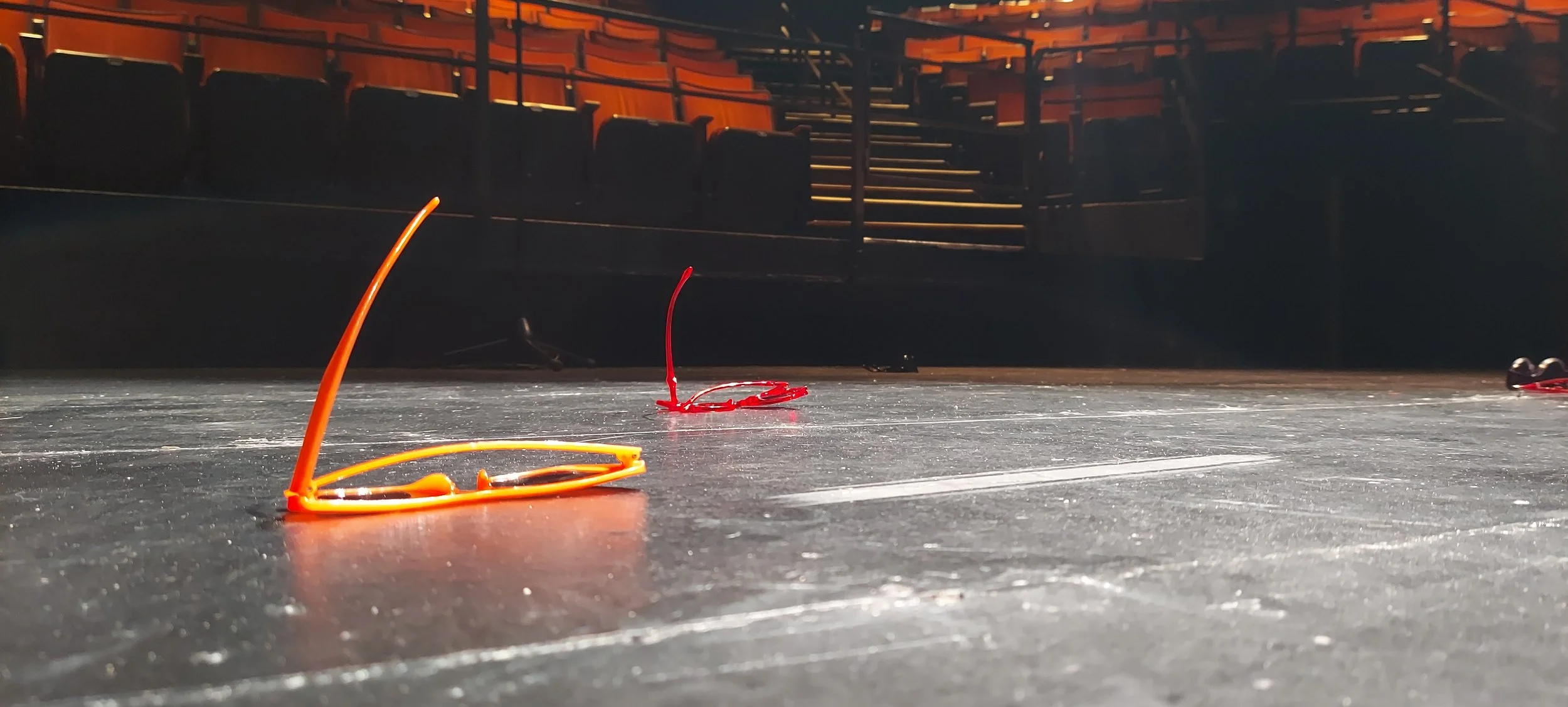
During the 2nd rehearsal, I tweaked the score to alternate between 8 count adagios (super slow movement) after doing a dance battle or running as fast as you can. I felt the improvisation was starting to meld together and look the same. So I decided that we needed to change it in some way. I also added that the dancers must vocalize once during the dance and when they were tired, they could roll slowly across the stage (it was an eight-minute piece with two dancers onstage the entire time).
While working with the dancers, I also talked with Isa about the space and their vision for costumes or lighting. We discussed the different camera angles they wanted to try and where the speakers would be in relation to the dancers on stage.
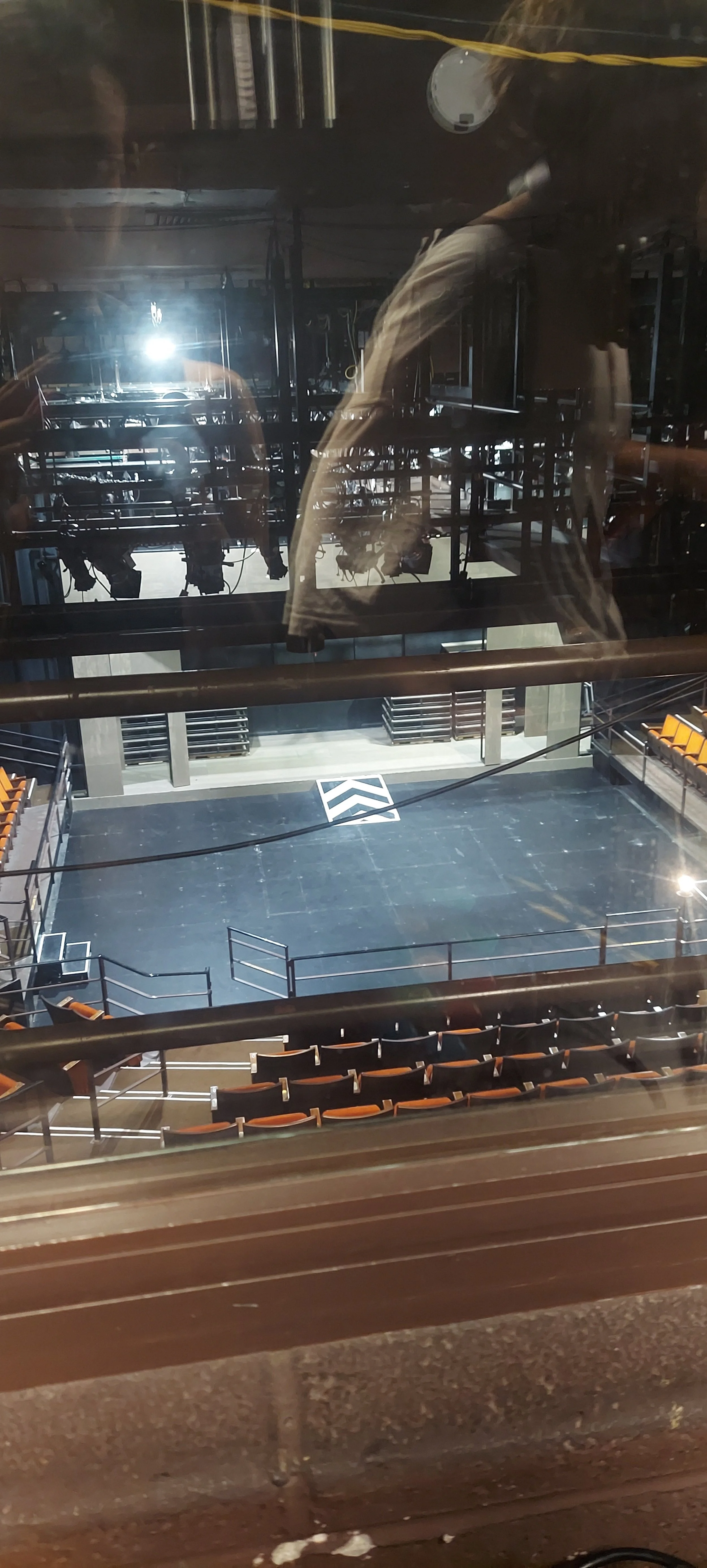
For the filming day we encountered a couple logistical challenges: there was a long pause between after the start button for the music was pushed and the music actually started, and some of the camera angles didn’t really capture the dancers the way Isa wanted.
Dancers playing around during the breaks between takes
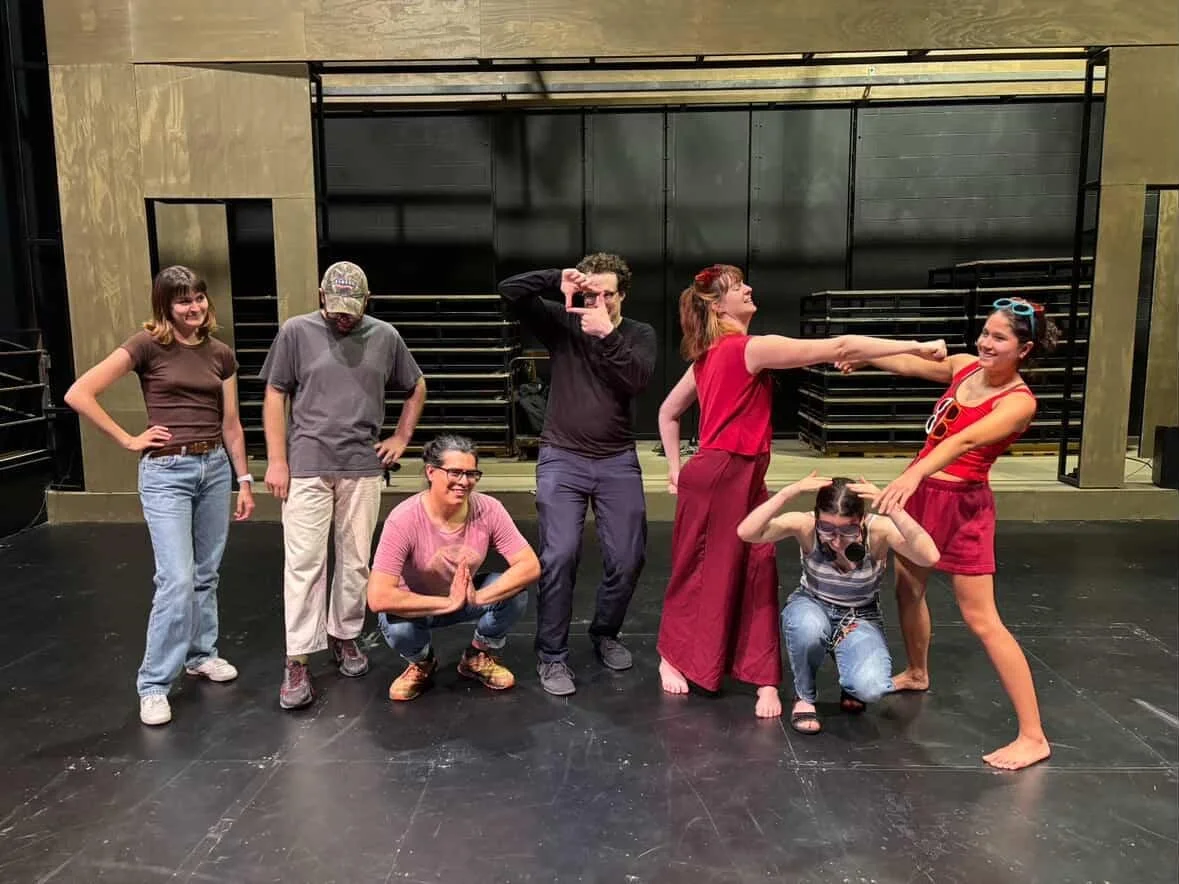
All the people who made it happen!
We problem solved and found another angle that helped Isa achieve the vision she wanted. Isa ended up incorporating the long pause into their film in an interesting way – if you want to see the finished product, check it out below.